


Winter Wetland Bird Counts: How to Join a Local Survey
A practical guide to counting wildfowl and waders for UK winter wetland surveys, from finding a local organiser and preparing your kit to recording and submitting reliable counts.
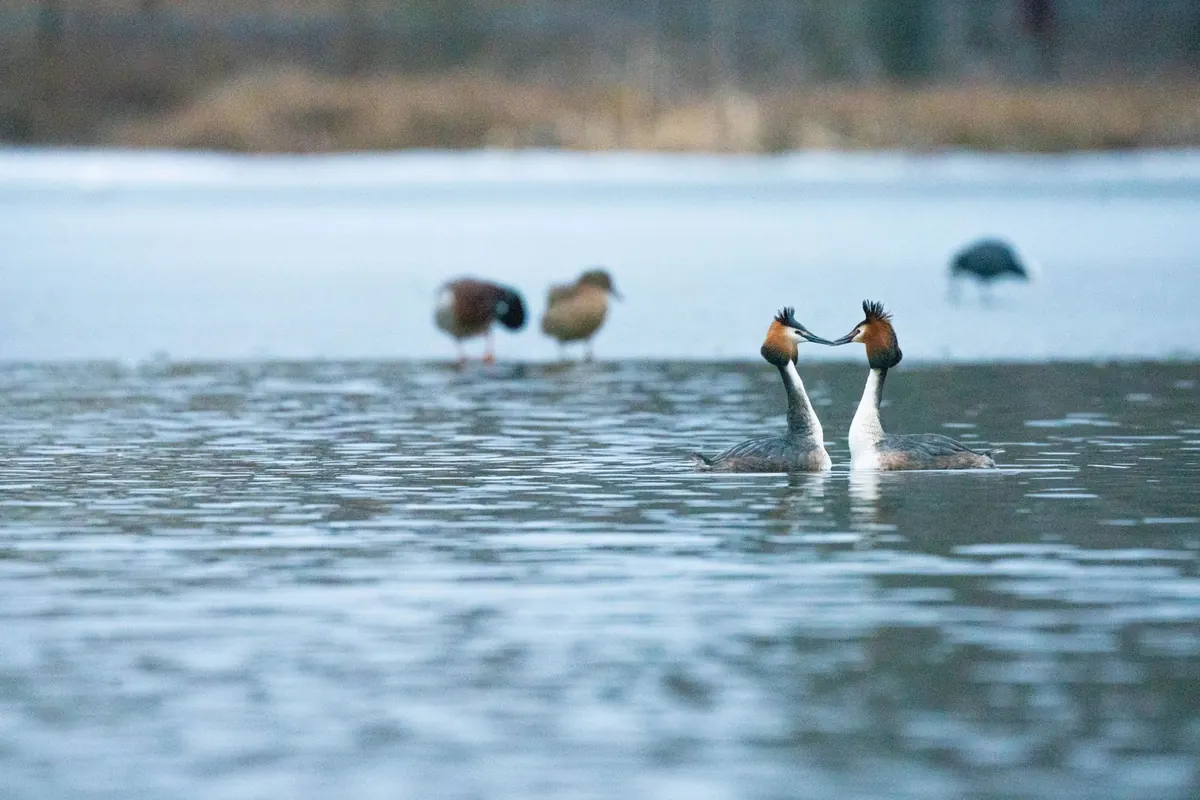
A winter wetland can look empty at first: grey water, brown reeds, a few ducks drifting. Then a lapwing flock lifts from the far bank and suddenly there are hundreds of birds to account for. That moment—when a casual walk becomes a count—is where citizen science begins. Across the UK, volunteers spend a few hours each month counting wildfowl and waders. Their records feed into long-term datasets used by conservationists, planners and site managers. You do not need a telescope the size of a drainpipe or a lifetime's list to take part. You need a site, a method and a willingness to write down what you see.
Why winter wetlands need counters
Winter is when our wetlands are busiest. Ducks, geese, swans and wading birds arrive from northern Europe and the Arctic, joining resident species. Estuaries, gravel pits, reservoirs, marshes and flooded fields become temporary homes. Counting them regularly shows whether numbers are stable, shifting or in trouble. A single count is a snapshot; a series of counts across years is evidence. That evidence can support habitat management, planning decisions and protection for the sites birds rely on. Volunteers make that possible. The Wetland Bird Survey (WeBS) is the best-known UK scheme; it is coordinated by the British Trust for Ornithology, with many local organisers and partner organisations involved.
What you will be counting
Wildfowl means swans, geese and ducks. Waders—sometimes called shorebirds—include lapwing, curlew, oystercatcher, redshank, dunlin, knot and snipe. You may also record grebes, cormorants, herons, rails and kingfishers if the scheme asks for all waterbirds. You do not have to identify every distant speck. Most surveys allow "species not identified" or group totals, and organisers would rather have an honest partial count than a confident wrong one. Learn the common species first: mallard, teal, wigeon, tufted duck, Canada goose, greylag goose, mute swan, oystercatcher, curlew, lapwing and redshank. A good field guide, a notebook and patience will take you further than expensive kit.
How to find a local survey
Start with the organisation that coordinates counts in your area. The BTO's WeBS pages list local organisers and vacant sites. Wildlife trusts, WWT centres, RSPB reserves and local bird clubs often need help. County bird recorders can point you towards active projects. If you live near an estuary, reservoir or gravel pit, ask whether it is already counted. Some sites have a waiting list; others have stretches no one covers. You can also join a one-off count or a training session before committing to a monthly slot. If you are new to birding, say so. Organisers usually pair newcomers with experienced counters or assign a straightforward section.
Before you go: preparation that pays off
Good counts are made before you leave the house.
- Confirm the date, meeting point and access arrangements with the organiser.
- Check tide times, weather and daylight. Estuary counts are often timed around high tide, when waders gather closer.
- Charge your phone and pack a spare battery or paper backup.
- Print or download the recording form and site map. Know your section boundaries.
- Clean your optics and pack layers, waterproofs, gloves, hat, flask, food, torch, pencil and notebook.
- Tell someone where you are going and when you expect to be back.
On the day: counting without double-counting
Arrive early enough to settle. Scan with binoculars first, then a telescope if you have one. Count birds in blocks—left to right, or by species—and write numbers immediately. For large flocks, count in tens: ten, twenty, thirty, marking groups on a tally counter or in your notebook. If a flock is mobile, wait for it to settle or count it as it passes a fixed point. Waders often feed in tight packs; estimate by counting a subgroup and multiplying, but only if the flock is evenly spread. Ducks may be scattered across open water. Count them in strips and add the strips. Record disturbance, dogs, bait diggers, aircraft or rising water that might move birds. Note the time, tide state, weather and visibility.
Do not chase a rarity. Stay on paths, keep your distance and avoid flushing flocks. A count that puts birds to flight is a poor count and bad for the birds. Mud and tides are serious hazards. Check local advice, never walk onto mudflats alone, and turn back if conditions change.
A simple counting routine
- Scan the whole site once without counting.
- Count each species in each section.
- Repeat the scan to check for missed birds.
- Add totals, then subtract any birds known to have moved between sections.
Recording and submitting your data
Use the scheme's form or app, or the paper form supplied by the organiser. Write species names in full or use accepted shorthand. Record numbers as digits, not words. If you saw a species but could not count it, write "present" and explain. Add the site name, section, date, start and finish times, observers, weather and tide. Photograph your form before handing it in. Submit promptly; late records are harder to check. If you are unsure about an identification, mark it as uncertain and ask for verification. Local organisers
Photo: Naren Yogarajah / Pexels