

How to Identify Common British Wetland Birds by Sound: A Beginner’s Guide
Learn ten of the most useful calls and songs of British wetland birds, plus a simple weekly listening routine that turns a wall of noise into recognisable neighbours.
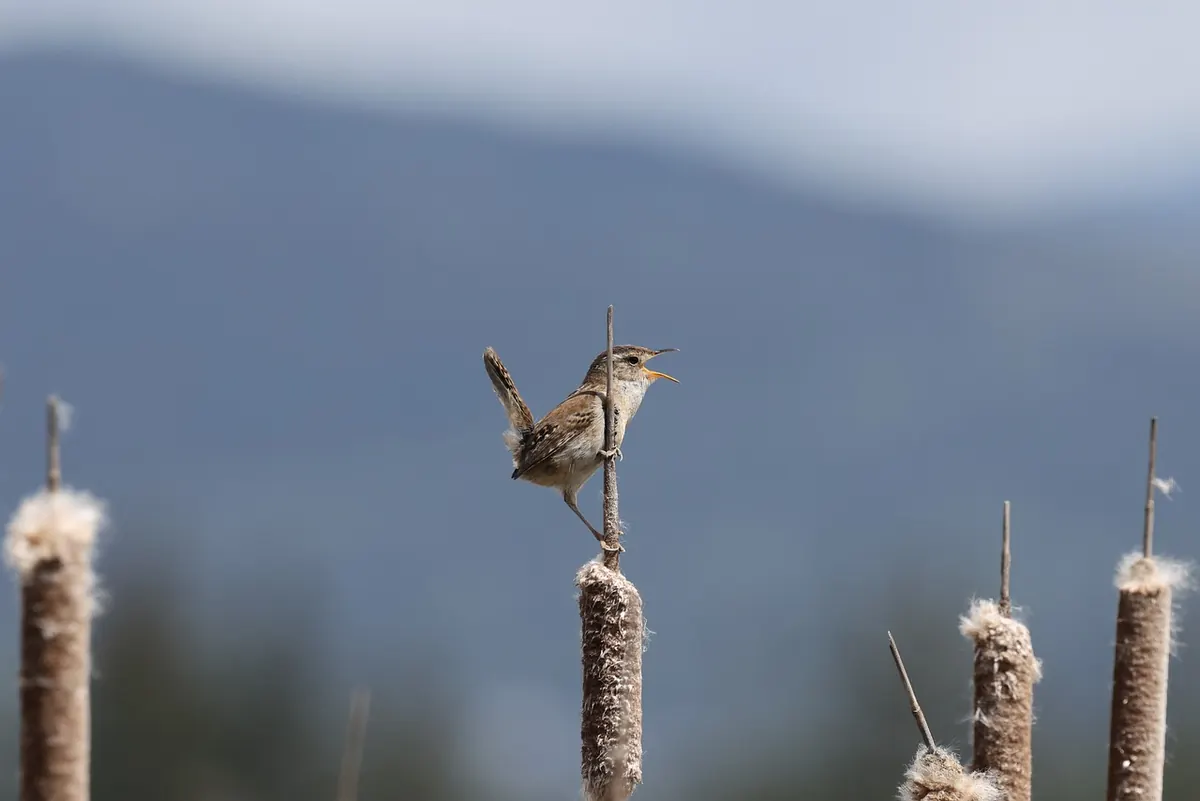
Stand at the edge of a reedbed in late April, close your eyes and wait. The noise is astonishing: clicks, whistles, squeals and a rhythmic churring that could be an insect or a bird. Almost none of it comes from anything you can see. Warblers stay buried in stems, rails walk under cover, grebes dive the moment you look at them.
Learning half a dozen calls changes that. The wall of sound becomes a list of neighbours, and you start knowing what is present rather than guessing. You do not need an expensive microphone or a musical ear. You need a few calls, a routine, and somewhere wet to stand.
Why sound is often the faster route
Wetland birds are built for concealment: brown, streaked and shadowed against reeds, mud and last year's stalks. Few of us get a clear view of a water rail, and sedge warblers rarely sit still for long. Sound is the practical shortcut. It also carries well over water and flat ground, so a bird calling from a hundred metres away is still identifiable. And calls are consistent — a coot sounds like a coot whether it is on a Norfolk broad or a Glasgow canal.
Ten calls worth learning first
Work through these in order. Give yourself a fortnight on the first three before adding more.
- Mallard. The female's loud, descending "quack-quack-quack" is the duck call everyone imitates. The male does not quack at all; he gives a softer, rasping note that is easy to miss.
- Moorhen. A sharp, explosive "kurruk" from the base of the reeds, plus hen-like clucking when it feeds in the open.
- Coot. Harder and more metallic than a moorhen: a clipped "kowk", often in short bursts, with ticking and trumpeting notes thrown in.
- Mute swan. Surprisingly quiet. Expect soft grunts, snorts and a hiss if you get close. The sound you will notice most is the throbbing wing beat of a low-flying bird, which carries a long way.
- Canada goose. The familiar two-syllable honk, often in noisy family groups. Listen for the rise and fall of a single bird against the chorus.
- Greylag goose. Nasal and slightly drawn out, with a three-part rhythm. Once you have it, greylags stand out from Canada geese overhead.
- Little grebe. A whinnying trill like a small, breathless laugh, usually from a bird hidden in marginal vegetation. Winter birds also give a thin, high whistle.
- Water rail. The classic squeal, often described as a piglet in distress, from deep in a reedbed. Also listen for a shorter "kwee" and low grunts.
- Sedge warbler. Fast, scratchy and erratic, with borrowed phrases from other birds mixed in. It often sings from a low perch or in a brief flutter above the reeds.
- Reed warbler. Slower and steadier: repetitive, rhythmic churring at an even pace, with far less mimicry. Count the rhythm rather than the notes to separate the two warblers.
Three more worth knowing when you meet them: the explosive burst of a Cetti's warbler from a bramble patch; the drumming of a common snipe, a mechanical bleat made with tail feathers during a display flight; and the far-carrying boom of a bittern, low enough to feel almost as much as hear.
A simple listening routine
- Pick one place and commit to it — a hide, a boardwalk, a bridge over a dyke. Familiar ground means you notice what is new.
- Arrive early. From April to June, be in position half an hour before sunrise, when the chorus is fullest.
- Stand still for two minutes before listening properly. Footsteps and rustling vegetation mask the quiet calls.
- Listen in layers: low, slow sounds first (rails, bitterns), then the middle, then the high, fast warblers. Trying to hear everything at once is why beginners feel overwhelmed.
- Follow one sound at a time. Choose the nearest call, listen until you can place it roughly, then move on.
- Write it down. A time, a direction and a word or two is enough; comparing notes with a recording later sorts out mistakes.
- Repeat weekly. Ten minutes in the same spot once a week beats a three-hour trip somewhere new.
Keep your phone ready but pocketed. Recordings are useful for checking yourself afterwards. Hold the phone still and cup a hand slightly behind it to block wind, which is the main reason home recordings sound useless.
Mistakes beginners make
- Trying to learn everything. Ten calls learned properly will do more for you than fifty half-known ones.
- Playing calls back. It pulls birds away from feeding and nesting duties, and it is easy to overdo. Listen instead.
- Ignoring the common birds. Mallards, coots and moorhens are the reference points that make unusual sounds stand out.
- Expecting a view. Many of these birds stay hidden. That is fine — identification by sound is the point.
- Giving up in July. Late summer is quieter, but juvenile begging calls and moulting wildfowl still give you plenty to work with.
When to listen through the year
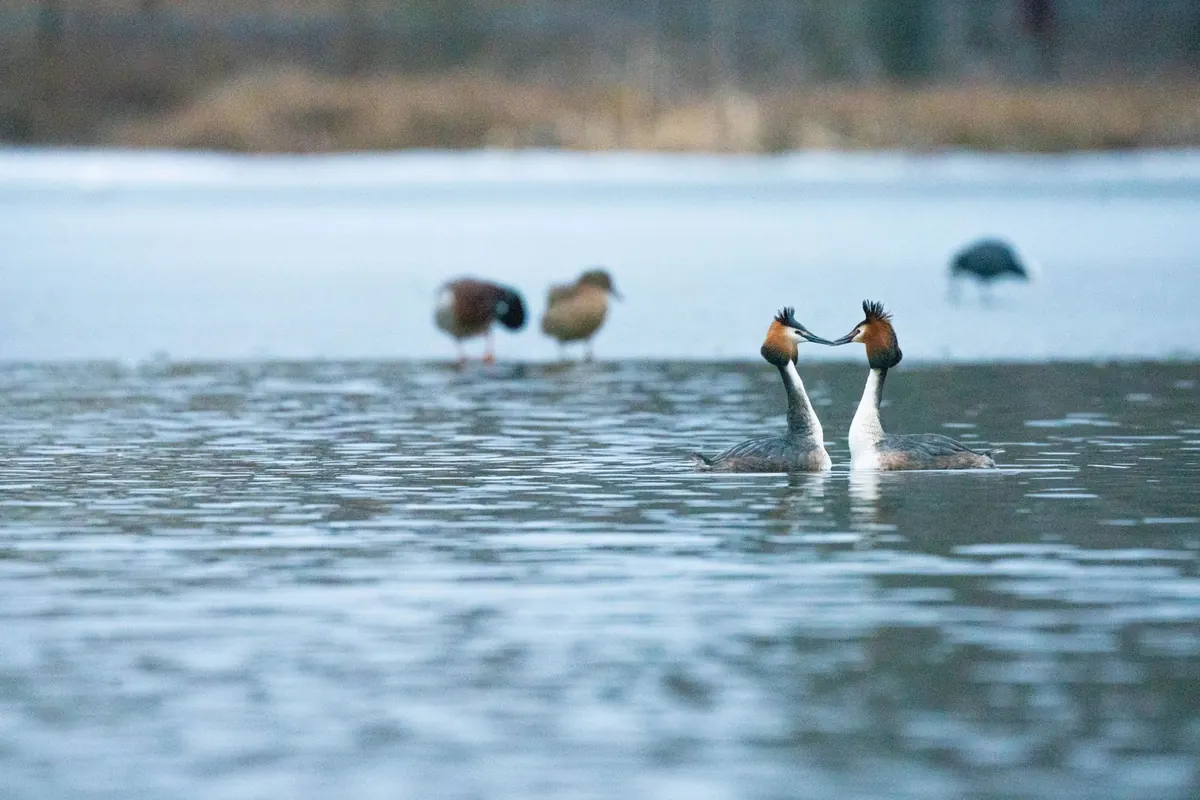
February to April: bitterns boom, great crested grebes begin their displays, and snipe drum over wet meadows.
April to June: the peak. Sedge warblers arrive first, reed warblers a little later, and the dawn chorus is at its best. Early morning and the last hour before dark are the richest times.
July to September: less song, more juvenile noise. Good for learning begging calls and watching family groups.
October to February: wildfowl and waders. Estuaries and flooded fields fill with geese, swans, teal and wigeon, and calls are often easier because the birds gather in the open.
Start here this week
Choose the nearest pond, canal, marsh or reservoir with reeds. Go once, stand still for ten minutes and write down every sound you can separate, even if you cannot name any of it. Then pick one call from the list above, learn it, and go back looking for it. Most people manage the mallard, moorhen and coot within a week.
By the end of a season you will walk along a dyke, hear a water rail squeal and a Cetti's warbler burst out of cover, and know both before you have seen a feather. That is the real pleasure of listening: the wetland stops being scenery and becomes a place full of specific, recognisable lives.
Photo: Veronika_Andrews / Pixabay